Die to Live
Explaining the Poem
To help understand the poem,
“Die to Live,” ponder these points.
In literature, some themes are called archetypal.
The theme of a poem or story
is its meaning. What does the poem mean?
Archetypal themes endure
from one generation to another,
and are, consequently, universal.
They apply to all mankind.
For me, “Die to Live” has
an archetypal theme.
Some Bible stories suggest the theme
of “Die to Live.” For example,
Jesus taught that men and women
must die and be born again
as new creatures.
(Remember the Nicodemus story).
We are taught that same symbolic
message with baptism:
the old self is buried in the watery grave,
and the new self comes forth.
For me, the die-to-live process
includes struggles and can take time.
This is why repentance is always needed.
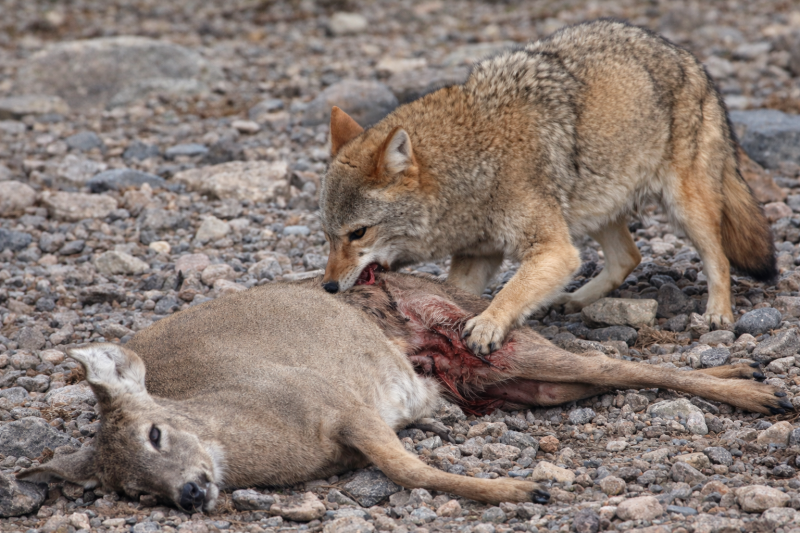
In the poem, the process of “die to live”
is suggested by the deer's death
which brings life to the coyote.
The “Die-to-live” cycle occurs in all nature,
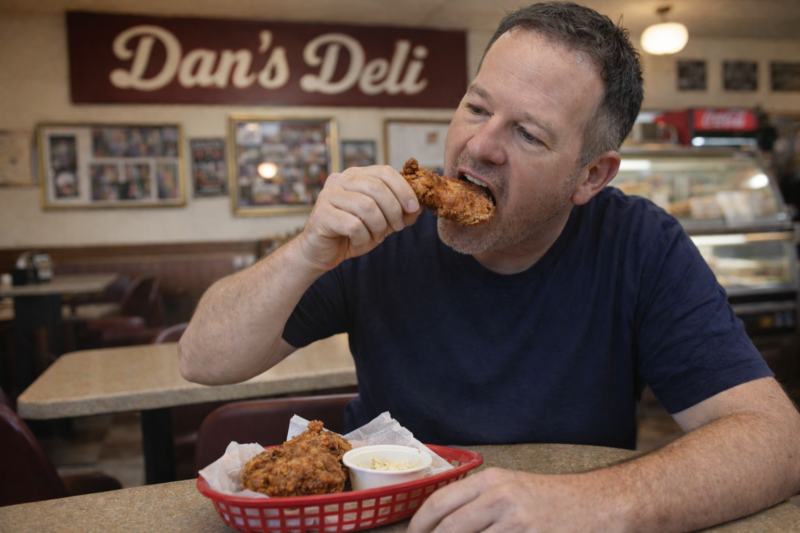
even daily, as we eat fruits and vegetables
which die as they help sustain our lives.
From Christ's painful death,
which comes from torn flesh and loss of blood,
life for all mankind is promised
through a universal resurrection.
On the cross, Jesus Christ died
so others could eventually live.
But for all people,
another transition and resurrection
of death-to-live can happen immediately.
The negative behaviors of the natural man
can die, and the resurrection
of the new man can occur
based on one’s behaviors.
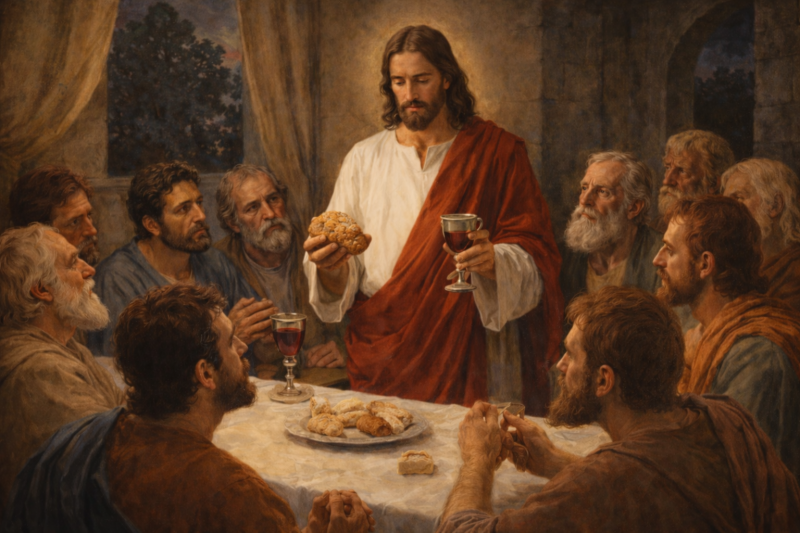
Weekly, symbolically, we ingest
Christ’s flesh and blood,
and this Christ-nourishment can heal,
lead, and alter us.
This life alteration helps lead us
to the “abundant life” and this
sustainable life is real.
The process works.
And what exactly is Christ’s marvelous,
healthy nourishment? It is His spirit
which can be with us.
What will His spirit do for us?
It enriches our lives.
It can stimulate and alter who we
become based on our choices.
It protects us.
Through both feelings and the
nudging of conscience, guidance comes
as we remember Him and
live His commandments.
We adjust our lives as God inspires
and guides us along His Commandment-Road.
Little by little, our old selves die,
and we have a new self in Christ.
We die to live.
Considering the sacrament again,
God teaches us the process of death to life
by using symbolic imagery.
Symbolically, we eat his flesh
and drink his blood to live.
It's wonderful symbolism.
It's very personal, unselfish, and intimate.
Jesus teaches, "A part of Me, my life power,
becomes a part of you."
What is more intimate?
Could Christ’s gift, that is, Himself,
cause us to feel love for the Giver? Yes.
The acceptance and awareness
of this truth produce joy
and appreciation for Jesus Christ.